
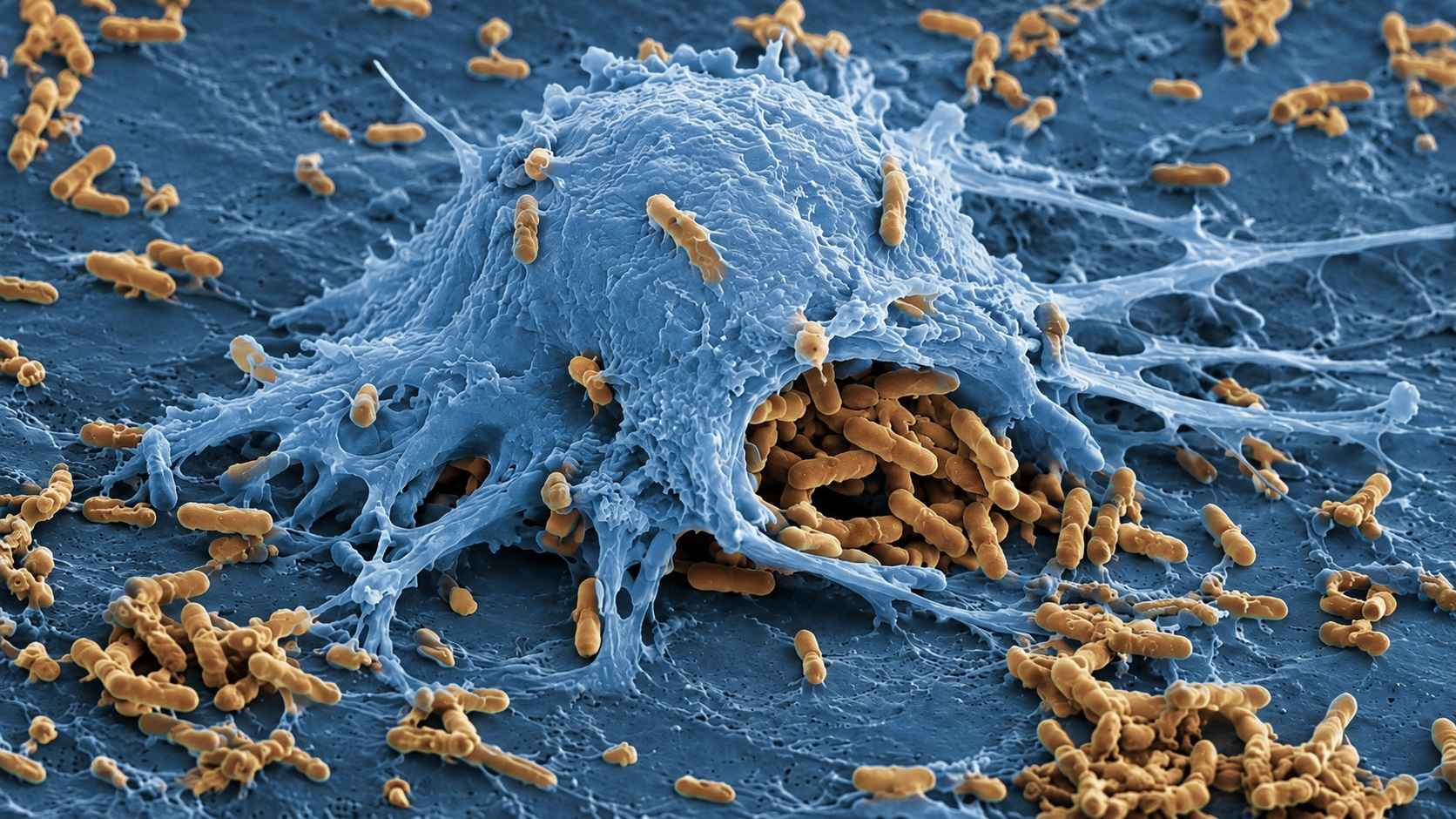
New paper published in PNAS: SAILR links macrophage survival to antimicrobial defense
Macrophages are frontline defenders of the immune system, but some pathogens can exploit them as protected niches. In our new PNAS study, we identify SAILR, a primate-specific long noncoding RNA that links macrophage survival to antimicrobial defense. Under resting conditions, SAILR supports macrophage viability. During infection, however, SAILR is downregulated, promoting macrophage death and thereby limiting the intracellular niche available to invading pathogens.
These findings reveal an unexpected layer of immune regulation: rather than simply activating antimicrobial programs, macrophages can sacrifice themselves to restrict pathogen survival. Because SAILR is primate-specific, this mechanism is absent from commonly used mouse models and highlights the importance of studying human-specific regulatory RNAs in infection biology.
SAILR may also have clinical relevance. Its expression is reduced in patients with severe COVID-19 and sepsis, pointing to its potential as a biomarker and as a future target for RNA-based immune modulation.
The study was carried out in collaboration with HIRI, JMU, and international partners. Read the full paper here:
A human-specific long noncoding RNA regulator of antigen-presenting cell viability and antimicrobial defense
Alexander J Westermann, …, Jörg Vogel, Leon N Schulte. PNAS, 2026 (PMID: 42461768; DOI: 10.1073/pnas.2520205123)
Press releases and media coverage:
Comments are closed